
Written By - Gabriele De Capitani
Ancient Culture in a New City
Vientiane Capital- Lao
After a long stay in Vietnam, it was time to move forward to the next country; in this case, forward meant west, and the next country was Laos (“Lao”, as the locals say). Arriving, while it is possible to travel between Lao and Vietnam via river boat, I opted for the slightly cheaper flight, which, to my surprise, was still one of the most expensive of the trip due to the fact that Lao has very few airplanes and, overall, not a very developed infrastructure, something that I shall talk about in the future. Nevertheless, after landing in the Capital, Vientiane, one late evening, and eating at a “very local”l burrito restaurant, it was time to rest for the adventure the subsequent weeks were holding.
I knew very little about the country before arriving; in fact, one of the greatest pleasures of this trip has been the freedom of calmly exploring a country without too many plans or expectations, just enough to have a main plan, timing, visa, and essential information; everything else has been open to unexpected adventures.
As I was saying, Lao was a very new place for me. I found many similarities to the neighbouring countreis, Electrical wires hanging in the streets, Buddhist temples, ancient ruins, an active street life, curious monuments, and museums.
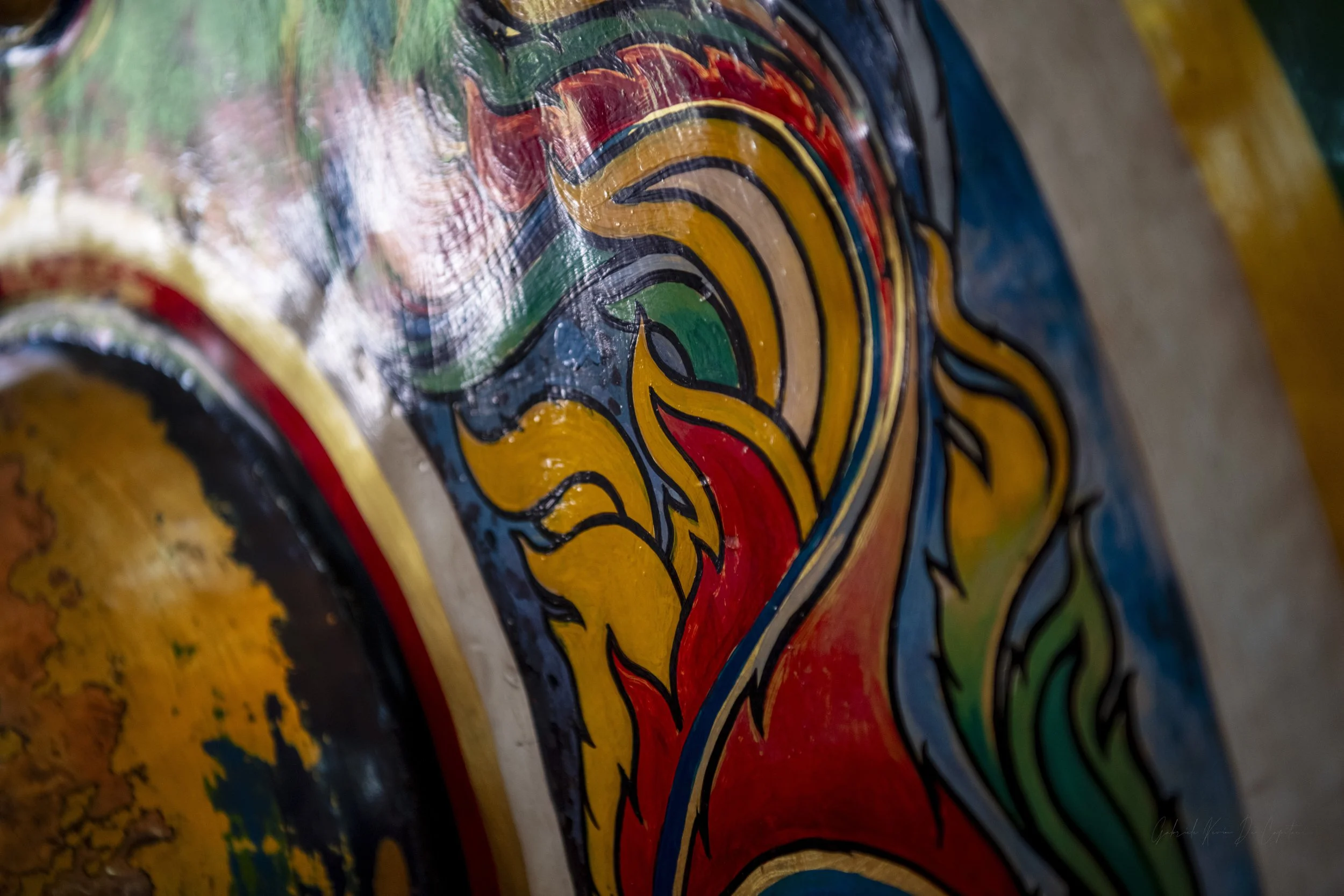
Something that definitely stood out, however, were the colors. In fact, even now, every time I think of Lao vibrant colors race through my mind, as it’s one of the most vibrant countries I remember. A great example of this was the painted art in religious Buddhist temples, rich in blue, red, gold, green, and yellow.
Wat Inpeng, Vientiane - Lao
Pha That Luang, Vientiane - Lao
Speaking of contradictions, just as I speak of Lao as one of the most vibrant countries I’ve been in, I’d now like to share some black and white pictures with you.
Whiele xploring the city, I found the major landmarks and musems to be quite empty. This was a littel eary, at times, but still allowed me to visit the sites undisturbed and admire the location for what is was.
this first picture is a statue of King Chao Anouvong, the last monarch of the Kingdome of Vientiane, who, before dying in 1828, lead the rebellion against Thai dominance and reclaimed Lao independence. His statue, in fact, is positioned facing Thailand, just a few hundred meters in front of where this picture was taken, across the Mekong River, where the border was and still is set.
This lone soldier, in a piazza within an empty park, with just some leaves occupying the streets, yet with a great history and accomplishment, protecting his people who honor him by ensuring his actions are remembered
A great example of this vibrancy is this gong, located in a Buddhist temple within the capital. Made of bronze and painted with motifs typical of the area, it’s placed next to the entrance of the temple and serves many purposes.
Like me, you might initially think that it would come with a mallet for it to be strung; however, Lao people rub the central piece, known as the “nipple”, with their fingers. If done right, this creates a vibration that builds and builds until the whole instrument creates such a hum to irradiate the whole room with its deep and peaceful sound.
Some people do this for Karma, to express wishes, earn “merit” or spiritual cleansing, but for me, I resonated with the other purpose of this action, “Physical Resonance”. The very pleasant vibration fills the room in such a deep and powerful tone that your whole body vibrates from the inside, and it’s not just about your body; the sound manages to clear your mind of thoughts and create a very calming, grounding moment for you and those around you, quite a magical experience.
It took a few tries, but I am proud to say that, with some help, I was able to play the gong and couldn’t help but smile the whole time.
Within another temple in the city called “Pha That Luang,” lying among many centuries-old monuments and statues, is this great golden resting Buddha. While it doesn’t appear out of place, its golden color and its vibrant red base, after all, match the surrounding constructions; further inspection made me wonder. Firstly, the head is surrounded by a wonderful combination of modern steel scaffolding, long sticks, and old planks, something that in itself could be a piece of art, and while ironic, it can very well play omaje to the picture itself. A merging of ancient with modern. This temple is hundreds of years old, the religion it represents has been around for thousands, and yet the statue that represents it is new, built just 20 years ago; it’s now being further restored, and not just this, it’s being restored using gold, a material that, as we discussed previously, represents stillness and lack of change. These contradicting elements, which combined make up what I was seeing in front of me, are what made taking this picture interesting and important to me.
Ancient parts of a temple in the foreground and modern power lines in the back, encapsulating an ambiguous element that merges tradition and modernity in the centre.
King Chao Anouvong Statue, Vientiane - Lao
King Chao Anouvong Statue, Vientiane - Lao
Paxutai, Vientiane - Lao
What a privilege it is to travel, learn, and photograph the achievements and historical feats of people across the world :)
Lao has a rich history, and like many other Southeast Asian countries, the people of Lao were repeatedly oppressed or colonized; this did not, however, stop them from accomplishing great feats and repeatedly regaining the independence they knew they deserved.
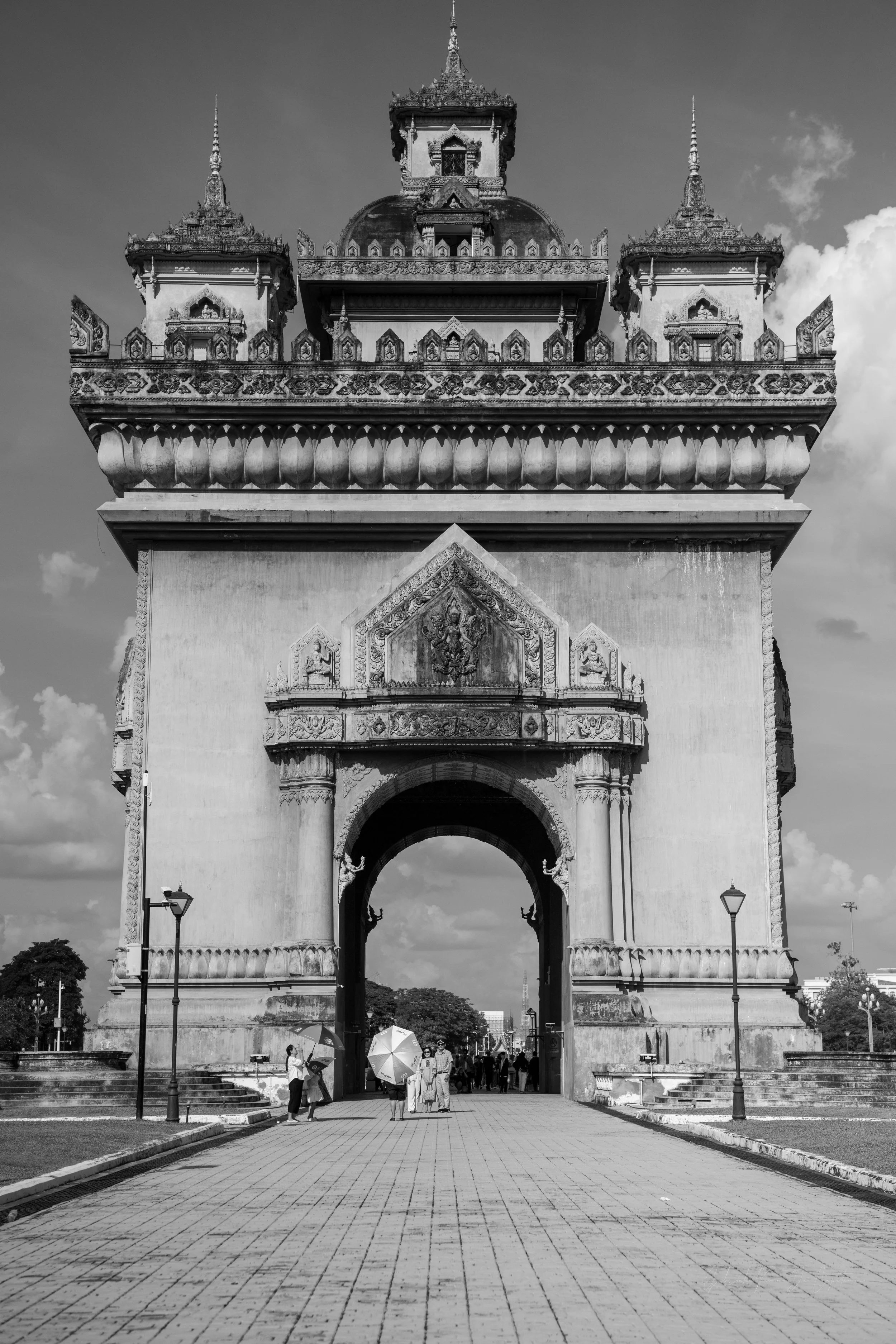
“Patuxai” was completed in 1968 to honor the fallen Laotian people who died fighting for independence from France.
It is inspired by the French Arc de Triomphe, which, interestingly, is itself inspired by Roman triumphal arches. What makes this even more curious is that each of these countries was once occupied and ruled by the other, leaving parts of their own culture within the now liberated ones, which in turn built monuments inspired by the previous rulers to celebrate their independence from them.
I shot this picture center frame, slightly lower to the ground, exalting the magnitude of the building, replicating the feeling of achievement that walking through it at the time of construction must have given. The people with umbrellas, I think, allow for a good sense of scale, and the visible cultural mix of European and local elements makes the location and monument unique.